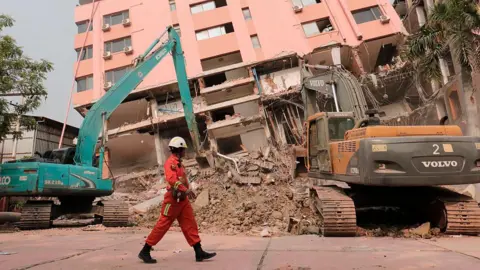
Myamar Violence Still Persists Even With Ceasefire Due To Earthquake
Attacks in Myanmar have yet to cease, even as the military junta and an alliance of rebel factions seemed to agree on temporary ceasefires for the purpose of relief efforts after the recent earthquake. UN Human Rights office reports indicate that, as of Friday, the military has at least attacked fourteen times after announcing the ceasefire. The military has blamed two of the alliance’s rebel factions for the upsurge in violence, while one faction blames violence dominantly on military operations resuming.
Concerns Of Fulfilling Basic Human Rights
The military council’s spokesperson Maj Gen Zaw Min Tun said, ‘We shall retaliate if military installations are provoked and attacked without reasonable justification.’ An army spokesperson has yet to comment regarding questions directed by Today News Affair.
UN Volker Turk called out for an operator’s pause for all military action to ensure support is given to victims of the earthquake while ensuring no barriers in movement to humanitarian groups are put. The civil war that was ongoing before, which is controlled by the 2021 coup junta and ethnic militias alongside resistance forces, worsened after the 7.7 magnitude earthquake on March 28.
Rescue Operations and Death Tolls
Ever since the Triumvirate Alliance of Rebel Forces declared a ceasefire on April 2nd, state media reports suggest that military officials consider the Myanmar Earthquake death toll to stand at 3564, with 5012 injuries, and 210 survivors still missing.
Relief efforts have been complicated by weekend rains. As for the United Nations Humanitarian Right offices, support initiatives only seem to have moved forward at the points where they have been permitted. The chronic restrictions enforced by the military have largely made a number of regions devoid of critical aid completely cut off from accessible emergency assistance, independent from what aid is supplied by civilians.
High Level of Prioritization Humanitarian
Without actually showing any form of concern, Fletcher states in the video captured while on ground that, “I was able to gather that the people here urgently need food, water, and… energy support. It is extremely crucial for them that they’re bound to have a place to stay.”
Just shy of 20 million people were facing needs even prior to this community’s earthquakes. “It’s a compounding crisis–an earthquake layered on top of conflict and existing needs,” he said.